I-ARC Member Spotlight | Jericho Road Community Health Center
Immigrant ARC is a coalition of immigration legal services providers and advocates working together throughout New York State to increase access to justice and access to counsel for all immigrant New Yorkers. Our coalition represents more than 80 member organizations across the state and each member brings a unique set of skills and expertise to the table which keeps our network strong.
Member Spotlights give our members a platform to showcase and share their milestones and accomplishments. Our next I-ARC Member Spotlight features Jericho Road Community Health Center (JRCHC), a member organization based in Buffalo, New York. We would like to thank JRCHC’s Senior Director of Community Services, Matt Tice, LCSW, for providing the answers to our interview questions on behalf of JRCHC.
What is Jericho Road Community Health Center (JRCHC)? | Fast Facts
Organization’s Full Name: Jericho Road Community Health Center (JRCHC)
Address: 184 Barton Street, Buffalo, NY 14213 (Main Site)
248 West Ferry Street, Buffalo, NY 14213 (Hope Refugee Drop-In Center)
Contact Information: 716-892-4354 | vivelegal@jrchc.org | www.jrchc.org/vive
Mission & Vision: Jericho Road exists to provide quality healthcare and holistic support to underserved people, no matter their insurance status, income, or country of origin. Founded in 1997 as a two-provider family practice, JRCHC has grown into a Federally Qualified Health Center (FQHC) serving over 24,000 unique patients annually (24,387 in 2022-2023). Their mission has remained the same: meet people where they are, and walk with them as they build stable, healthy lives. That work happens locally in Buffalo and globally. JRCHC runs five international health sites across the Democratic Republic of Congo, Sierra Leone, and Nepal, delivering more than 63,000 patient visits annually overseas. The core principle stays the same whether someone walks in off Barton Street or presents at a clinic in Komao - healthcare is a dignity issue, not a privilege.
Service Area: JRCHC is headquartered in Buffalo and serves Erie County and Western New York. But Vive Shelter draws guests from across the country because it sits near the Canadian border. Thus their reach extends well beyond Western New York. Recently, many of their patients came from ZIP codes spanning the entire city: 14211 (18% of patients), 14213 (16%, where they're located), 14207 (16%), 14212 (9%), plus another 36% from other areas. That geographic spread shows JRCHC is not just a neighborhood clinic, but is a valued regional resource. Vive sees people come from all over the country more often with this goal of going to the Canadian Border to initiate a refugee claim there.
Populations Served: JRCHC serves over 26,000 unique patients at their clinics annually. These patients are low-income Buffalo residents, refugees, asylum seekers, immigrants, and U.S. citizens alike, along with anyone else facing barriers to healthcare in the vicinity. JRCHC serves families at every stage: roughly 40% are 0-18 years old, 53-56% are 19-64, and 6% are 65+. Looking at language diversity, at Vive specifically, Spanish dominates at 52.8%, followed by Tamil, Portuguese, Arabic, Dari, Lingala, French, Haitian Creole, Urdu, and more.
Special populations served include:
Newly arrived refugees - post-resettlement case management services through Hope (2,372 clients served last reporting period)
Asylum seekers - find shelter, legal help, and medical care at Vive (1,763 individuals served in-person last year)
Pregnant refugees and low-income women - receive pregnancy mentoring through the Priscilla Project (54 women served)
Patients without insurance - JRCHC doesn’t turn anyone away regardless of ability to pay.
Services: JRCHC is known for bringing quality primary care services to the Buffalo area, but they provide so much more to the community.
Services provided at JRCHC include:
Primary medical care for the whole family (86,990 total medical visits in the last year)
Case management at Hope Refugee Drop-In Center
Free citizenship and English classes
Shelter and food for asylum seekers at Vive Shelter
Immigration legal assistance on-site
Pregnancy mentoring through the Priscilla Project
Health Resources and Services Administration (HRSA) has highlighted three of JRCHC’s programs - Hope, the Priscilla Project, and our Care Coordination team - as national model practices for community health centers. Also of note, JRCHC runs a Family Medicine Residency program with the University of Buffalo to help address workforce needs and cultural competency.
Vive Shelter
Projects Highlighted by JRCHC:
“Hope Refugee Drop-In Center is often the first place families walk into after resettlement. Our staff helps them enroll in benefits, register kids for school, open utility accounts, and learn how life here works - all while offering free citizenship and English classes. This isn't abstract case management. It's showing up months after arrival when case management has ceased and answering the question many people struggle to define: ‘What do I do next for my family?’”
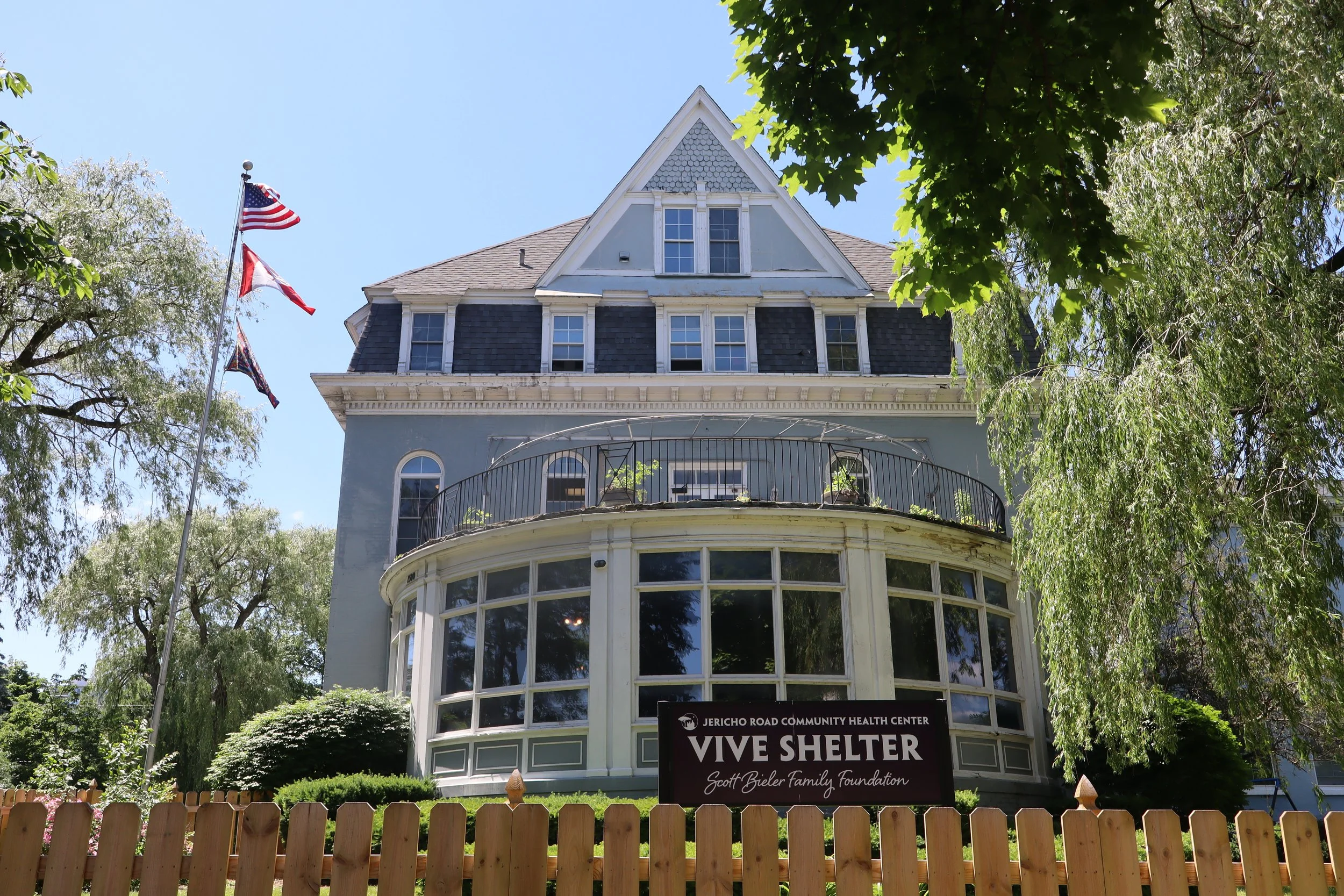
“Vive Shelter, founded in 1984 and part of Jericho Road since 2015, is one of the longest-running asylum seeker shelters in the country. Tens of thousands of people from more than 100 countries have passed through its doors. In 2025, we served 1,763 asylum seekers representing 44+ countries. What makes Vive different is that the shelter, the clinic, and immigration legal help all sit under one roof. Legal status and health cannot be separated - if someone's afraid to seek care because of their documentation, they won't come until an emergency becomes a crisis. We provided 1,739 medical visits to Vive residents last year.”
Vive supports clients across New York State who are eligible to cross the Northern border to Canada and file refugee claims there. Their staff are able to review documents, identify Safe Third Country Agreement exceptions, and provide interview preparation before people approach the border. To connect with the JRCHC legal team, contact them at: vivelegal@jrchc.org.
How Does JRCHC Measure Its Impact Within the Community?
As a Federally Qualified Health Center (FQHC) and Article 28 facility, JRCHC reports both clinical and operational data to Health Resources and Services Administration (HRSA) and New York State. JRCHC uses their Annual Report to paint a fuller picture of their impact (i.e. number of patients served, visits, programs, and outcomes). Please see the Annual Reports available here.
“Our best evidence of impact extends far beyond any single statistic. So much of this work shows up in stories rather than spreadsheets. But the numbers we watch closely include the hundreds of individuals housed over the last year - overnight stays that might seem modest until you realize each guest is sleeping somewhere safe for the first time in weeks. Just as important are the moments that don't make a spreadsheet: a guest who gets a work permit, wins asylum, or takes the citizenship oath later after moving on from the shelter.”
Matt Tice, LCSW, Senior Director of Community Services
JRCHC’s reach and impact extends beyond New York via five international health sites across the Democratic Republic of Congo, Sierra Leone, and Nepal. These sites deliver more than 63,000 patient visits annually. Some of these visits include surgeries and child births. Matt Tice further put those numbers into perspective stating, “Those aren't outputs. They're people who accessed care that didn't exist before we showed up.”
Major Accomplishments: Starting as a two-provider family practice in 1997, JRCHC has grown into Federally Qualified Health Center (FQHC) that cares for over 24,000 people annually. Several programs at JRCHC have been recognized by the Health Resources and Services Administration (HRSA) as national models. In 2015, JRCHC absorbed and expanded Vive la Casa, a 40-year-old asylum shelter, into a full Jericho Road program. This program is now simply called Vive.
Matt Tice provided insight into accomplishments that might be difficult to recognize at first glance or by exploring JRCHC’s website, but that carry immense weight. Matt explained, “For the second year in a row, funding for Vive was included in the New York State budget - a signal that our work has political recognition even when national policy shifts against asylum seekers.” Hand in hand with this political recognition, Matt stated, “In 2025, Assemblymember Jon Rivera helped announce a $250,000 state investment for a new playground at Vive. It sounds small compared to clinical infrastructure, but it's a statement: refugee children deserve spaces to play, not just survive.”
Resources to Share
JRCHC Website: www.jrchc.org
General JRCHC Phone Line: 716-348-3000 | contact@jrchc.org
Hope Refugee Drop-In Center: 716-881-0539 | https://jrchc.org/hope-refugee-drop-in-center/
JRCHC & I-ARC Membership
In preparation for this blog article, I-ARC asked JRCHC why I-ARC membership matters to them.
“Jericho Road, which operates both Vive and the Hope Refugee Drop-In Center, is an I-ARC member, which matters because we're a health center and shelter that houses legal services - not a traditional legal aid office. Membership plugs our staff into a statewide network of practitioners sharing training, strategy, and hard-won lessons. It keeps our teams sharp and reminds them that others across the state are fighting the same fights.”
- Matt Tice, LCSW, Senior Director of Community Services
I-ARC also asked JRCHC what they feel I-ARC’s greatest strength is.
“Community. This work can feel lonely, especially far from New York City, and I-ARC knits the whole state together. When policy attacks come, a provider in Buffalo, one in Utica, and a provider in Brooklyn can respond with the same information and the same strategy. That's the strength: dozens of organizations acting like one. The alternative is fragmentation - each org reinventing the wheel while the ground shifts beneath them. I-ARC prevents that. Being a part of I-ARC means we're part of something bigger than ourselves.”
- Matt Tice, LCSW, Senior Director of Community Services
Vive Residents
Field Insights | Excerpts from Our Interview with JRCHC
I-ARC: Currently, what do you feel are some of the most pressing concerns faced by those providing immigration legal services in New York State?
JRCHC: Demand keeps climbing while capacity stays flat. Filing deadlines are shorter, policies shift with little warning, and staff spend as much time relearning rules as applying them. In Western New York the problem is sharper - we're far from the dense legal networks downstate and there simply aren't enough immigration attorneys in the border region to meet the need.
Enforcement is exceptionally high in this region with both heavy ICE presence and an unusually large number of active Customs and Border Protection officers targeting people. Funding rarely matches demand, and staff burnout is real. On top of all that, enforcement fears keep many people from seeking help at all, even when they qualify for it.
One thing people outside our circles miss; fear is a public health issue. When families avoid clinics because they're scared of immigration consequences, chronic conditions become emergencies and preventable diseases spread. We see the downstream effects in our exam rooms - people waiting months or years before they can trust us enough to come in.
I-ARC: How has your work been impacted by this Administration’s anti-immigrant agenda?
JRCHC: It touches nearly everything we do. Residents and clients face narrower paths to protection, faster deadlines, and the constant threat of deportation. Rule changes land with little warning, so we scramble to retrain staff and rework plans that were solid a week earlier.
The quieter damage is more complicated: fear keeps families away from clinics and services we want to offer, harming their health and their cases alike. Demand keeps climbing while the ground shifts under our feet. We've seen lulls in the regular flow of people presenting to go to Canada while policy changes - like TPS revocation - trigger scrambles for groups from countries like Haiti.
I-ARC: If you woke up tomorrow with a magic wand, what is the number one barrier you would make disappear for the immigrant community? What barrier would you make disappear for immigration legal service providers?
JRCHC: For the immigrant community, I'd erase the fear and the waiting. People spend years in limbo, unable to work legally or see their families, never knowing what comes next. Fair and timely decisions would resolve most other problems on their own.
For providers, I'd make funding instability disappear. With steady, predictable funding instead of the endless grant cycle, we could keep experienced staff, plan more than a few months ahead, and never turn anyone away. The current system forces us to constantly pivot based on what's fundable, not what's needed.
I-ARC: What message do you have for people who are not ingrained in immigration law on a daily basis, but are trying to understand the black box that is immigration court?
JRCHC: Picture standing in a courtroom where the government has trained attorneys on its side and you have no lawyer - because no one is entitled to one in immigration court, not even a child. Add rules that change without notice, hearings that get moved with little warning, and waits stretching over years. That black box isn't broken. For too many people, it functions exactly as intended. Every case number in the backlog belongs to someone who left home because staying was no longer safe.
I-ARC: As your organization remains committed to helping immigrant New Yorkers, what major activities/efforts are you planning next?
JRCHC: With the shifting landscape, we've needed to find new funding partners and supporters. For the first time in our history, over the last two years, we've been included in the New York State budget for an albeit smaller but necessary portion of our operation budget. We're also exploring ways to serve other immigrants across Buffalo and beyond facing housing instability and surviving intimate partner violence. Ideally, this would allow us to become more sustainable in funding our work.\
Whatever changes come, our approach stays the same: pair healthcare with the shelter, case management, and legal help people need to actually be well. Dr. Allana Krolikowski, our new CEO (appointed September 2025), frames it as strengthening systems that allow us to deliver care with excellence while building lasting financial sustainability. That's the next chapter - scaling without losing the soul of what got us here.
How To Reach Out to JRCHC
Vive General Phone Line: 716-892-4354
Hope Refugee Drop-In Center: 716-881-0539
For Canada-US Border Legal Assistance: vivelegal@jrchc.org
To contact Matt Tice, LCSW, Senior Director of Community Services: matthew.tice@jrchc.org
Vive Residents